Monday, April 2, 2012

Firm dropped by Visa says under 1.5 million card numbers stolen

Firm dropped by Visa says under 1.5 million card numbers stolen


NEW YORK | Sun Apr 1, 2012 11:45pm EDT
(Reuters) - Visa Inc (V.N) has dropped payment processor Global Payments Inc (GPN.N) from its list of approved service providers after a major cyber intrusion that could expose Visa, MasterCard, American Express and Discover card holders to fraud.
Global Payments said it believes less than 1.5 million credit card numbers were stolen in the cyber security breach.
It said so-called Track 2 card data was stolen but card holders' names, addresses and social security numbers were not obtained. It also believes the affected part of its processing system is confined to North America.
Visa, the world's largest credit and debit-card processing network, said it removed the company from its registry of compliant service providers due to "unauthorized access into a portion of (Global Payments') processing system".
It told Global Payments to revalidate its compliance processes with the payment card industry's data security standard.
Global Payments, which is based in Atlanta and has estimated its revenues will top $2 billion this financial year, will hold a conference call with investors on Monday morning.
A person improperly using Track 2 information can transfer the account number and expiration date of a card to a magnetic stripe on a fraudulent card and then try to use it to make online purchases.
The attempt could be blocked, however, if an online merchant asks for the CVV code, or the three or four digits usually located on the back of card.
Global Payments is one of dozens of companies that operate along the payment-processing chain. They are targeted by hackers due to the vast amount of sensitive financial information they handle.
The breach was first reported by a blog on computer security and cybercrime, Krebs on Security, which said it could affect more than 10 million card holders.
Global Payments spokeswoman Amy Corn said although the company had been taken off Visa's list of compliant service providers it continued to process transactions. "We expect to be reinstated once we have been issued a new report of compliance," she said.
The firm, which has about 3,700 employees, was spun off from information services firm National Data Corp in 2001.
For the year ended May 31, Global Payments reported revenue of $1.9 billion, up 13 percent. At a presentation in January it estimated revenue for the 2012 financial year at about $2.15 billion.

Sunday, April 1, 2012

Seniors over 60 still stuck paying off college loans

Seniors over 60 still stuck paying off college loans

  • Article by: YLAN Q. MUI , Washington Post 
  • Updated: April 1, 2012 - 9:38 PM
Whether it's their own loans or ones for children and grandchildren, many seniors can't retire these debts.
The burden of paying for college is wreaking havoc on the finances of an unexpected demographic: people 60 and over.
New research from the Federal Reserve Bank of New York shows that Americans in that age bracket still owe about $36 billion in student loans, providing a rare window into the dynamics of student debt. More than 10 percent of those loans are delinquent. As a result, consumer advocates say, it is not uncommon for Social Security checks to be garnished or for debt collectors to harass borrowers in their 80s over student loans that are decades old.
That even seniors remain saddled with student loans highlights what a growing chorus of lawmakers, economists and financial experts say has become a central conflict in the nation's higher education system: The long-touted benefits of a college degree are being diluted by rising tuition rates and the longevity of debt.
Some of these older Americans are still grappling with their first wave of student loans, while others took on new debt when they returned to school later in life in hopes of becoming more competitive in the labor force. Many have co-signed for loans with their children or grandchildren to help them afford ballooning tuition.
The recent recession exacerbated this problem, making it more difficult for older Americans -- or the youths they are supporting in school -- to get good-paying jobs. And unlike other debts, student loans cannot be shed in bankruptcy.
Maxine Bass, 60, of Minnesota said her granddaughter had dreamed of going to college since she was a child. But her mother could barely afford to provide her lunch money, much less pay for tuition. Bass had good credit and a steady job.
So when her granddaughter was accepted at St. Catherine University to study biology, Bass said she gladly co-signed for a $38,000 loan with her. But when the granddaughter fell behind on the payments as she hunted for a job with a decent salary, Bass' own finances took a hit. "I went into a panic, like, what was I gonna do?" Bass wondered.
Because of late fees and missed payments, Bass said she and her granddaughter owe about $69,000. They are now contributing monthly, but Bass is worried she won't be able to catch up.
A college degree has traditionally been viewed as a virtual guarantee of a better-paying job and a higher standard of living. And on the whole, that remains true. The unemployment rate for Americans with only a high school education is 9.2 percent -- more than double the rate for those with college degrees. Median weekly earnings for high school graduates last year were $638, according to government data, compared with $1,053 for college grads.
But with the recent recession prompting layoffs at white-collar law firms and investment banks as well as auto plants and construction companies, more Americans are finding themselves out of work and deep in debt. At a Senate subcommittee hearing last week, Treasury Secretary Timothy Geithner said the cost of higher learning should reflect the quality of education received.
Many students "haven't been able to earn a return that justifies the expense," he said.
Over the past decade, the cost of college rose between 2 and 6 percent per year, depending on the type of institution, according to the College Board.
Meanwhile, the New York Fed estimates that Americans owed $870 billion in student loans during the third quarter of last year, significantly outpacing credit card debt or auto loans. Borrowers age 60 and above accounted for 5 percent of that debt.
In some cases, student debt has been a burden for even financially responsible older Americans.
Sen. Richard Durbin, D-Ill., has introduced legislation that would allow private student loan debt to be discharged in bankruptcy, although borrowers would still have to pay off any federal loans.
Last year, President Obama addressed the issue by easing the repayment requirements for federal student loans. The new rules allow borrowers to pay 10 percent of their income for 20 years before the loan is forgiven.
Still, the bill would only address one aspect of what many believe is a more fundamental problem: the cost of college. Until that is solved, Suzanne Martin, an attorney with Consumers Union, said she anticipates older Americans' share of student loans will only increase.
"This current generation of borrowers is going to be a generation of seniors who are burdened with debt," she said.
***********************************************************************

Forget Tuition: How Retirees Can Attend College for Free

Email and web use 'to be monitored' under new laws


Email and web use 'to be monitored' under new laws


The government will be able to monitor the calls, emails, texts and website visits of everyone in the UK under new legislation set to be announced soon.
Internet firms will be required to give intelligence agency GCHQ access to communications on demand, in real time.
The Home Office says the move is key to tackling crime and terrorism, but civil liberties groups have criticised it.
Tory MP David Davis called it "an unnecessary extension of the ability of the state to snoop on ordinary people".
Attempts by the last Labour government to take similar steps failed after huge opposition, including from the Tories.
'Unprecedented step'
A new law - which may be announced in the forthcoming Queen's Speech in May - would not allow GCHQ to access the content of emails, calls or messages without a warrant.
But it would enable intelligence officers to identify who an individual or group is in contact with, how often and for how long. They would also be able to see which websites someone had visited.
In a statement, the Home Office said action was needed to "maintain the continued availability of communications data as technology changes".

“Start Quote

The government will be able to get at it with no by or leave from anybody”
David DavisConservative MP and former shadow home secretary
"It is vital that police and security services are able to obtain communications data in certain circumstances to investigate serious crime and terrorism and to protect the public," a spokesman said.
"As set out in the Strategic Defence and Security Review we will legislate as soon as parliamentary time allows to ensure that the use of communications data is compatible with the government's approach to civil liberties."
But Conservative MP and former shadow home secretary David Davis said it would make it easier for the government "to eavesdrop on vast numbers of people".
"What this is talking about doing is not focusing on terrorists or criminals, it's absolutely everybody's emails, phone calls, web access..." he told the BBC.
"All that's got to be recorded for two years and the government will be able to get at it with no by your leave from anybody."
He said that until now anyone wishing to monitor communications had been required to gain permission from a magistrate.
"You shouldn't go beyond that in a decent civilised society, but that's what's being proposed."
'Attack on privacy'
Nick Pickles, director of the Big Brother Watch campaign group, called the move "an unprecedented step that will see Britain adopt the same kind of surveillance seen in China and Iran".

“Start Quote

It is a pretty drastic step in a democracy”
Shami ChakrabartiLiberty
"This is an absolute attack on privacy online and it is far from clear this will actually improve public safety, while adding significant costs to internet businesses," he said.
Shami Chakrabarti, director of Liberty, added: "This is more ambitious than anything that has been done before. It is a pretty drastic step in a democracy."
The Internet Service Providers Association said any change in the law much be "proportionate, respect freedom of expression and the privacy of users".
The Sunday Times quoted an industry official who warned it would be "expensive, intrusive [and] a nightmare to run legally".
Even if the move is announced in the Queen's Speech, any new law would still have to make it through Parliament, potentially in the face of opposition in both the Commons and the Lords.
The previous Labour government attempted to introduce a central, government-run database of everyone's phone calls and emails, but eventually dropped the bid after widespread anger.
The then Home Secretary Jacqui Smith did pursue efforts similar to those being revisited now, but the Conservatives and Liberal Democrats continued to voice their concerns.
The shadow home secretary at the time, Chris Grayling, said the government had "built a culture of surveillance which goes far beyond counter terrorism and serious crime".
Chris Huhne, then the Lib Dem home affairs spokesman, said any legislation requiring communications providers to keep records of contact would need "strong safeguards on access", and "a careful balance" would have to be struck "between investigative powers and the right to privacy".

Pakistani boy who burned himself over uniform dies

Pakistani boy who burned himself over uniform dies
Updated at 01:15 PM today
TAGS:

PESHAWAR, Pakistan -- A Pakistani boy who set himself on fire because his parents could not afford to buy him a new school uniform has died, his family and officials said Sunday.
The tragic story is a reminder of the woeful lives of Pakistan's many dirt-poor citizens. It brings out the challenges facing those clinging to the hope that education could be the ticket to climbing up from the bottom rung of society.
Like many in Pakistan, 13-year-old Kamran Khan's family did not have enough money to send him to school. He was such a promising student that a local private school allowed him to attend for free, said the boy's older brother, Saleem Khan.
Even then, the family struggled. The boys' father borrowed money from relatives to buy a work visa to Saudi Arabia four months ago, but he hasn't yet found a job there, said the elder Khan. Their mother works as a maid.
The younger Khan used to wander the streets in Shabqadar, their town of 60,000 in northwest Khyber Pakhtunkhwa province, looking for bits of metal scrap and other items to sell to help out the family, said his brother.
He never asked for anything, his brother said, but last month he pleaded with his mother for several days to buy him a new school uniform, a white shalwar kameez, the loose-fitting pants and top worn by both men and women in Pakistan. He was embarrassed that his old one was worn out and patched up.
His mother sympathized with him but repeatedly told him the family didn't have the money. She finally lost her patience with him on March 24 and slapped him, said his brother.
The young boy responded by saying, "If you can't buy me a uniform, then I'm going to kill myself," according to his brother.
He stormed out of their house, doused himself with gasoline and lit himself on fire, said his brother. The youth suffered burns on 65 percent of his body. He was taken to an army-run hospital in Punjab province. But the family could only raise one-tenth of the roughly $5,500 they needed for his treatment.
He died of his injuries on Saturday, said Zahir Shah, a police officer in Shabqadar.
Public school fees in Pakistan average only around $2 per month, but even this is often too much for poor Pakistanis, who tend to have many children.
About 30 percent of Pakistanis have received less than two years of education, according to a report issued last year by the Pakistani government.
The results are poor even for those kids who do attend school. Around 50 percent of school children aged 6-16 can't read a sentence, said the report.

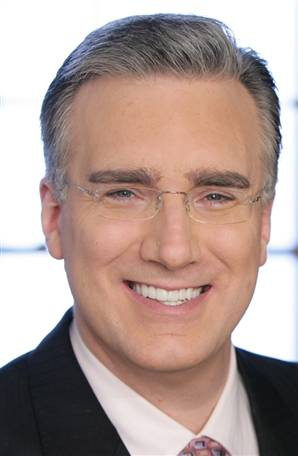
BREAKING: Keith Olbermann to join Fox News

BREAKING: Keith Olbermann to join Fox News

New show will focus on one topic exclusively

In a move certain to send shockwaves throughout cable news, liberal commentator and former ESPN, MSNBC and Current TV host Keith Olbermann has announced that he is joining Fox News to host a new nightly show at 5 PM. The program, tentatively titled “Gored”, will be entirely focused on criticizing former Vice-President and current Current TV head Al Gore.
Olbermann was terminated by Current on Friday over creative differences in the direction of the channel’s news department.
“We’ve always admired Mr. Olbermann’s bombast,” said Fox News’ Vice-President Samuel Salmon. “And when we found out that he was interested in doing a show that would consistently and exclusively attack Al Gore, we decided that we had to get him on the air ASAP.”
The show will replace The Five and begin airing April 1, 2012.
Bill O’Reilly, who has been labeled “The Worst Person in the World” by Mr. Olbermann over a hundred times, reacted tentatively to the news. “As long as Olbermann sticks to Gore, everything should just be just fine. Did you know that Gore uses airplanes and doesn’t even have a wind farm in his backyard?”
Fox News takes a special interest in attacking the former Vice President. He’s often blamed for any aberration in the weather and mocked for caring about climate change or inventing the Internet—though Gore never said he did invent the Internet and did, in fact, help expedite the process that created the Internet.
Salmon did admit that Olbermann will be subject to a 5-minute delay in case he accidentally says anything that is not Gore related.
“At Fox,” Salmon said. “We’ve found that common enemies unite people more effectively than values. Olbermann hates Gore so what could possibly go wrong?”

Police Are Using Phone Tracking as a Routine Tool

March 31, 2012

Police Are Using Phone Tracking as a Routine Tool


WASHINGTON — Law enforcement tracking of cellphones, once the province mainly of federal agents, has become a powerful and widely used surveillance tool for local police officials, with hundreds of departments, large and small, often using it aggressively with little or no court oversight, documents show.
The practice has become big business for cellphone companies, too, with a handful of carriers marketing a catalog of “surveillance fees” to police departments to determine a suspect’s location, trace phone calls and texts or provide other services. Some departments log dozens of traces a month for both emergencies and routine investigations.
With cellphones ubiquitous, the police call phone tracing a valuable weapon in emergencies like child abductions and suicide calls and investigations in drug cases and murders. One police training manual describes cellphones as “the virtual biographer of our daily activities,” providing a hunting ground for learning contacts and travels.
But civil liberties advocates say the wider use of cell tracking raises legal and constitutional questions, particularly when the police act without judicial orders. While many departments require warrants to use phone tracking in nonemergencies, others claim broad discretion to get the records on their own, according to 5,500 pages of internal records obtained by the American Civil Liberties Union from 205 police departments nationwide.
The internal documents, which were provided to The New York Times, open a window into a cloak-and-dagger practice that police officials are wary about discussing publicly. While cell tracking by local police departments has received some limited public attention in the last few years, the A.C.L.U. documents show that the practice is in much wider use — with far looser safeguards — than officials have previously acknowledged.
The issue has taken on new legal urgency in light of a Supreme Court ruling in January finding that a Global Positioning System tracking device placed on a drug suspect’s car violated his Fourth Amendment rights against unreasonable searches. While the ruling did not directly involve cellphones — many of which also include GPS locators — it raised questions about the standards for cellphone tracking, lawyers say.
The police records show many departments struggling to understand and abide by the legal complexities of cellphone tracking, even as they work to exploit the technology.
In cities in Nevada, North Carolina and other states, police departments have gotten wireless carriers to track cellphone signals back to cell towers as part of nonemergency investigations to identify all the callers using a particular tower, records show.
In California, state prosecutors advised local police departments on ways to get carriers to “clone” a phone and download text messages while it is turned off.
In Ogden, Utah, when the Sheriff’s Department wants information on a cellphone, it leaves it up to the carrier to determine what the sheriff must provide. “Some companies ask that when we have time to do so, we obtain court approval for the tracking request,” the Sheriff’s Department said in a written response to the A.C.L.U.
And in Arizona, even small police departments found cell surveillance so valuable that they acquired their own tracking equipment to avoid the time and expense of having the phone companies carry out the operations for them. The police in the town of Gilbert, for one, spent $244,000 on such equipment. 
Cell carriers, staffed with special law enforcement liaison teams, charge police departments from a few hundred dollars for locating a phone to more than $2,200 for a full-scale wiretap of a suspect, records show.
Most of the police departments cited in the records did not return calls seeking comment. But other law enforcement officials said the legal questions were outweighed by real-life benefits.
The police in Grand Rapids, Mich., for instance, used a cell locator in February to find a stabbing victim who was in a basement hiding from his attacker.
“It’s pretty valuable, simply because there are so many people who have cellphones,” said Roxann Ryan, a criminal analyst with Iowa’s state intelligence branch. “We find people,” she said, “and it saves lives.”
Many departments try to keep cell tracking secret, the documents show, because of possible backlash from the public and legal problems. Although there is no evidence that the police have listened to phone calls without warrants, some defense lawyers have challenged other kinds of evidence gained through warrantless cell tracking.
“Do not mention to the public or the media the use of cellphone technology or equipment used to locate the targeted subject,” the Iowa City Police Department warned officers in one training manual. It should also be kept out of police reports, it advised.
In Nevada, a training manual warned officers that using cell tracing to locate someone without a warrant “IS ONLY AUTHORIZED FOR LIFE-THREATENING EMERGENCIES!!” The practice, it said, had been “misused” in some standard investigations to collect information the police did not have the authority to collect.
“Some cell carriers have been complying with such requests, but they cannot be expected to continue to do so as it is outside the scope of the law,” the advisory said. “Continued misuse by law enforcement agencies will undoubtedly backfire.”
Another training manual prepared by California prosecutors in 2010 advises police officials on “how to get the good stuff” using cell technology.
The presentation said that since the Supreme Court first ruled on wiretapping law in 1928 in a Prohibition-era case involving a bootlegger, “subtler and more far-reaching means of invading privacy have become available to the government.”
Technological breakthroughs, it continued, have made it possible for the government “to obtain disclosure in court of what is whispered in the closet.”
In interviews, lawyers and law enforcement officials agreed that there was uncertainty over what information the police are entitled to get legally from cell companies, what standards of evidence they must meet and when courts must get involved.
A number of judges have come to conflicting decisions in balancing cellphone users’ constitutional privacy rights with law enforcement’s need for information.
In a 2010 ruling, the United States Court of Appeals for the Third Circuit, in Philadelphia, said a judge could require the authorities to obtain a warrant based on probable cause before demanding cellphone records or location information from a provider. (A similar case from Texas is pending in the Fifth Circuit.)
“It’s terribly confusing, and it’s understandable, when even the federal courts can’t agree,” said Michael Sussman, a Washington lawyer who represents cell carriers. The carriers “push back a lot” when the police urgently seek out cell locations or other information in what are purported to be life-or-death situations, he said. “Not every emergency is really an emergency.”
Congress and about a dozen states are considering legislative proposals to tighten restrictions on the use of cell tracking.
While cell tracing allows the police to get records and locations of users, the A.C.L.U. documents give no indication that departments have conducted actual wiretapping operations — listening to phone calls — without court warrants required under federal law.
Much of the debate over phone surveillance in recent years has focused on the federal government and counterterrorism operations, particularly a once-secret program authorized by President George W. Bush after the Sept. 11 attacks. It allowed the National Security Agency to eavesdrop on phone calls of terrorism suspects and monitor huge amounts of phone and e-mail traffic without court-approved intelligence warrants.
Clashes over the program’s legality led Congress to broaden the government’s eavesdropping powers in 2008. As part of the law, the Bush administration insisted that phone companies helping in the program be given immunity against lawsuits.
Since then, the wide use of cell surveillance has seeped down to even small, rural police departments in investigations unrelated to national security.
“It’s become run of the mill,” said Catherine Crump, an A.C.L.U. lawyer who coordinated the group’s gathering of police records. “And the advances in technology are rapidly outpacing the state of the law.”