Monday, December 9, 2013

Biggest-ever fast food strike today! Thousands to walk out across 100 cities


Biggest-ever fast food strike today! Thousands to walk out across 100 cities

Major escalation makes U.S. history. Here's why it matters, and what victory could meanVIDEO


Biggest-ever fast food strike today! Thousands to walk out across 100 citiesDemonstrators supporting fast food workers protest outside a McDonald's, July 29, 2013, in New York's Union Square. (Credit: AP/John Minchillo)
Thousands of fast food workers plan to walk off the job in 100 U.S. cities today, a major escalation in labor’s strongest-ever challenge to an industry that’s become ever more central to the present and future of U.S. work. One year after a surprise work stoppage by 200 New York City fast food workers, two questions raised by that first-of-its-kind walkout have already been answered: Could workers sustain and grow their numbers in the months after returning to the job? And could they spread their siege of the industry from comparatively labor-friendly New York City to presumably less hospitable environs across the United States? What remains unclear is whether they can compel the giants of the increasingly dominant fast food industry to concede power to employees, and at what cost.
“I’m tired of trying to make ends meet and they’re not meeting …” Richmond, Va., Burger King employee Crystal Travis told Salon in a pre-strike interview. “I don’t make enough to even have Christmas.” Richmond is one of dozens of cities where fast food strikes are expected today for the first time. Prior to her three years at Burger King, Travis said she’d spent a decade working at fast food chains including Wendy’s and McDonald’s, and found “not much of a difference” between them. When she first watched last year’s New York walkout, Travis told Salon, her question was, “Is it real? Are they going to make a difference?” But having watched the strikes spread,  said Travis, “you see a reflection of yourself.” Travis, who’d never struck before today, has been visiting fellow fast food workers who live in her public housing complex to urge them to join her, and said others have shown up at her door wanting to know more about the strike. She said her organizing efforts have drawn attention from her store’s general manager, who told her in front of co-workers, “You’re crazy. Ain’t nothing gonna change.”


Jobs like Travis’ – paltry pay, constant performance for customers, erratic hours and no union — are on the rise. “Because these are the jobs that are dominant in our economy, the fact that they are very low-wage jobs” is “setting the standards for how some businesses think they can treat their workers,” Tsedeye Gebreselassie, a researcher for the pro-union National Employment Law Project, told me in April. She noted that the top three occupational categories listed in the latest Bureau of Labor Statistics data were all jobs found in retail or fast food. And while Democrats and Republicans push trade or training as solutions for low-wage workers,research from the progressive Center for Economic and Policy Research suggests that the share of U.S. jobs that are “good jobs” declined during three decades in which the ranks of U.S. workers with advanced degrees almost doubled. From 1979 to 2010, authors John Schmitt and Janelle Jones argued, “good jobs” declined for college graduates as well as for other workers, the result of a reduction in workers’ bargaining power across the board. “The question,” Schmitt told me in the lead-up to a 60-city August walkout, “is how do we reconstruct bargaining power for workers?”
Asked about today’s strike, McDonald’s emailed a statement saying the corporation and its franchisees “are committed to providing our employees with opportunities to succeed. We offer employees advancement opportunities, competitive pay and benefits.” It also touted “training and professional development that helps them learn practical and transferable business skills.”
At a moment where organized labor is largely playing painful defense – most recently evidenced by this week’s blows to hard-fought pensions in Illinois and Detroit – the fast food campaign offers a rare case of high-profile, high-stakes offense against a virtually union-free industry. Like the organizers behind last week’s 1,448 Black Friday Wal-Mart protests, the fast food campaigners have employed both “comprehensive campaign” tactics wielding political, media and legal weapons against corporate brands, and a wave of one-day strikes in which a minority of the workforce walks off the job in hopes of embarrassing management and engaging co-workers and the public. Unlike the Wal-Mart effort or most other labor campaigns, they’ve targeted their demands – for $15 per hour and the right to unionize without intimidation — at all the industry’s top players at once.
It’s a strategy that’s drawn notice across the labor movement. While the key player in staffing, funding and directing the effort has been the Service Employees International Union, a July report on local pre-convention forums organized by the AFL-CIO (a union federation that doesn’t include SEIU) suggests that fast food strikes came up over and over. Daniel Gross, who helped found the Industrial Workers of the World’s decade-old Starbucks Workers Union (a union without recognition from Starbucks), told me the spread of strikes had vindicated his group’s view that “you don’t need to wait for recognition, workers are ready to fight,” but noted,“We didn’t know workers were willing to strike across the country – that’s a new learning.” The campaign has also sparked segments on “The Colbert Report” and full-page industry-backed ads warning of robot takeovers.
Indeed, the fast food effort can tout a rash of bad press for top corporations – especially McDonald’s, which has made news both for workers’ strikes and for its advice they pray more often and budget zero dollars for heat. Organizers say the strategy has also shaken loose real gains at particular stores, from schedule fixes to $2 raises. Perhaps most significantly, organizers claim that tactics like a picket and occupation of a Wendy’s have largely succeeded at averting or reversing retaliatory firings of strikers (in contrast, over twenty workers fired by Wal-Mart after joining a June strike are still out of a job).
So where will it all go?
University of California at Santa Barbara labor historian Nelson Lichtenstein last month told me he believes fast food and Wal-Mart strikes have proven “successful” in that they’re “having a big impact on public policy at the local level” — echoing other academics who’ve argued the strikers’ ultimate impact will be through spurring policy change rather than securing collective bargaining. Congressional Progressive Caucus co-chair Raul Grijalva told Salon it had been “huge” and “very powerful” to see how fast food workers “risked everything” by striking, and that the $15 they demanded should be the federal minimum wage. Local SEIU president David Rolf and Seattle Council member-elect Kshama Sawant credited the strikers with helping lay the groundwork for the $15 minimum wage law that passed narrowly last month in the airport town of SeaTac. And someone present at an August gathering SEIU held with allies in Las Vegas told Salon that, along with a national deal with the top three burger corporations to facilitate unionization, strategies under serious consideration included a move to pass state and local laws mandating $15 fast food wages (asked about that account, SEIU characterized those discussions as preliminary and hypothetical).
But fast food workers and SEIU officials have repeatedly rejected suggestions that their ultimate focus is on passing new wage laws. “The minimum wage stuff is not really central to the campaign – I think more than anything, they are an effect of the campaign,” said Kendall Fells, an SEIU coordinator serving as organizing director for Fast Food Forward, the New York arm of the fast food effort (on-the-ground organizing efforts there have been backed by SEIU and largely spearheaded by the ACORN offshoot New York Communities for Change).
“The workers have decided that the way to win this campaign is to continue to grow,” Fells told Salon, “continue to strike, continue to get more community residents involved, more community leaders to the rabble, more press” on worker activism and management insults, all “exposing these companies for what they are.” Given the past year’s growth, he said, “It’ll be even bigger six months from now, and eventually the pressure will bring these organizations to the table.” He noted SEIU had “done this with janitors when people thought janitors would never have a union … We did this for hospital workers and nursing home workers … So we’ve seen this story before, and the way that you win is you stick to the script.”
Given the vicissitudes of labor law and the franchisee structure of the industry, any prospect of sustainable fast food unionization would require the effective — presumably coerced — consent of national corporations. Per recent labor history, could that mean a deal in which industry giants pave the way for franchisees to recognize unions and bargain collectively, and the union agrees in exchange to restrictions on how much labor costs could go up, or how many stores could be affected? When I asked SEIU president Mary Kay Henry and key SEIU strategist Scott Courtney that question in an August joint interview, Courtney answered “It could be something like that”; Henry said, “I think anything you know about traditional collective bargaining is possible, and then things we haven’t imagined.”
Asked this week if he’d accept a compromise in which SEIU agreed to leave some workers out of unionization or pre-restrict what gains could come out of contract talks, Fells answered, “I mean, I think it’s hard to say, because it really comes down to what the workers decide.” He said a committee of worker delegates representing cities with pre-August strikes decides the course of the campaign. (In an interview with In These Times, a source identified as an activist Chicago cashier charged that the campaign’s decision-making process amounted to “going through the motions” to get workers to agree to staffers’ pre-determined plans.) Asked about the delegates’ decision-making process, Fells said, “There’s banging around, banging around, and then we’ll land at something that everyone feels comfortable with.”
Would an agreement from that group be a pre-condition for SEIU to make a deal with fast food corporations? “Yeah, I mean the workers are going to be involved on every level …” answered Fells. “Workers are involved in every decision that may happen on the fast food campaign nationally and locally.” Asked in August about Henry and Courtney’s comments, Rev. Martin Rafanan, the community director for St. Louis’ fast food effort, also emphasized the importance of democracy, telling Salon he was “for any tactic or strategy at this point which can move us forward … But from where I’m standing, I’m a community ally, so my goal is to stand with workers. I believe that workers should make decisions about how they’re going to organize their industry.”
So far there aren’t any signs that McDonald’s, Burger King or Yum Brands is poised to come to SEIU or anyone else with a deal. What started as a strike of 200 in one city, and is expected to today turn out thousands in a hundred cities, may need to grow exponentially again before such a prospect is truly conceivable. “I know it’s not going to be, you know, next month or next year that our raise[s] go up,” Crystal Travis told me before going on strike. “But at least we’ll be heard. And it might make a lot more people next time go, ‘Well, I’m going next time,’ or ‘I need to find out about this,’ like I did.”
If that does come to pass, and labor’s challenge to America’s fast food leviathans proves lasting and muscular enough that bosses seek a deal, what kind would be good enough to take? Last month (on a panel at Demos – video below), I told KFC worker-activist Naquashia LeGrand, one of the original fast food strikers, about my conversation with Henry and Courtney, and asked what level of compromise she’d be willing to accept. “Honestly,” she answered to applause, “compromise is not in my book. It’s more – it’s winning. I’m a winner, you know. So I would want to win our $15 and a union.”

Report: States Opting Out Of Medicaid Expansion Will Lose Billions

Report: States Opting Out Of Medicaid Expansion Will Lose Billions

Mbud01ehsswgh9cqyyrh
Newscom
The report covered 20 states, all with Republican governors and/or state legislatures that refused to expand Medicaid under the health care reform law after the U.S. Supreme Court made it optional in June. It did not include several states (such as Pennsylvania and New Hampshire) where expansion is not yet finalized, but state officials are working toward it.
“In states that elect not to expand Medicaid, millions of their most vulnerable residents will be unable to gain health insurance,” Commonwealth Fund President David Blumenthal said in a statement. “Those same states will be forgoing billions in federal funds while paying for other areas to provide expanded coverage. In light of these facts, it seems likely that non-expanding states will face increasing pressure over time to reconsider their decisions.”
Under Obamacare, the federal government covers 100 percent of the costs for the first three years and never less than 90 percent after that.
The Commonwealth Fund further explained the study's methodology as follows:
Federal funds that pay for state Medicaid programs are raised through federal general revenue collection—taxes paid by residents in all states—whether or not they participate in the program. Therefore, taxpayers in states not participating in the Medicaid expansion will bear a share of the overall cost, without benefitting from the program. Glied and Ma estimated the net loss of federal funds to states that do not expand Medicaid by using projected federal Medicaid spending in each state and calculating the federal Medicaid-related taxes paid by each state.

Fascinating county by county map of the uninsured - link

Fascinating county by county map of the uninsured

PHOTOS: Shanghai’s Unbelievable Pollution Problem Started The Week Badly, Ended Worse

PHOTOS: Shanghai’s Unbelievable Pollution Problem Started The Week Badly, Ended Worse

BY REBECCA LEBER ON DECEMBER 9, 2013 AT 9:02


Shanghai, China
Shanghai, China
CREDIT: AP
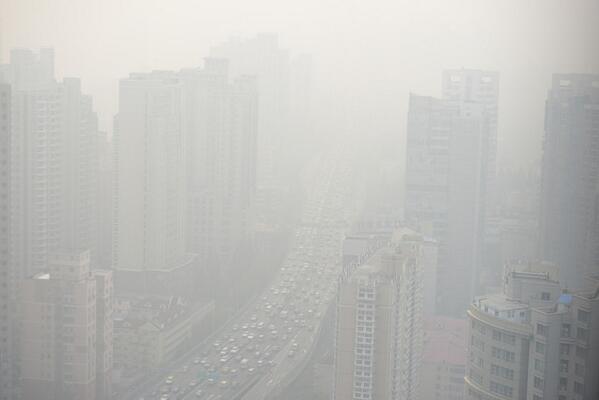
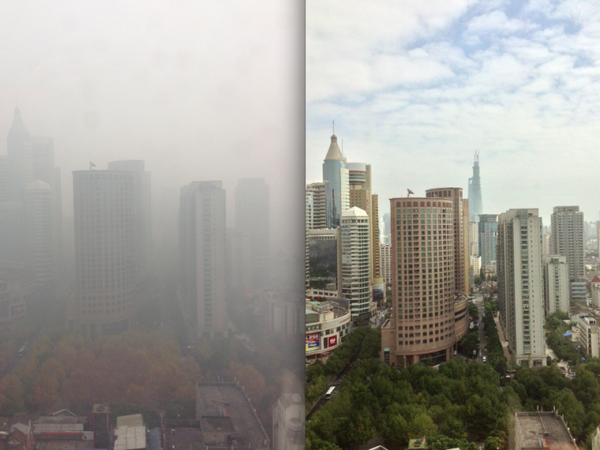
For the seventh day this month, Shanghai officials have warned children and the elderly to stay inside in a city where 24 hours exposed to the off-the-charts pollution would have hazardous consequences to one’s health. Hundreds of flights and sporting events have been cancelled, while face masks and air purifiers sold out in stores. All week, the pollution level hovered at “heavily” and “severely” polluted, according to Shanghai’s Air Quality Index, at up to 31 times the recommended levels.
Eerie photographs of Shanghai show a city in a yellow haze:


View image on Twitter
Officials have ordered vehicles off the road to curb air pollution, so far removing roughly 30 percent.
11219628526_b7538659d1_z
CREDIT: LENINERS ON FLICKR
Despite warnings, runners who completed a Monday marathon complained of their lungs hurting.
shanghai1
This image from the city’s official index shows PM2.5, a small harmful particle for human health, at a concentration that almost broke the scale China uses to measure air quality, a range from 0-500.
noaa china shanghai_0
CREDIT: GREENPEACE
A heat map from a Greenpeace analysis of NOAA data shows how the smog has traveled from coal-burning regions into the city. Orange shows the highest concentrations of sulfur dioxide (SO2) and the pollutant’s trajectory. The sources come from coal regions Jiangsu, Anhui, Shandong and Henan.
China Shanghai Pollution
CREDIT: AP
What is China, and the world, doing to cut the sources of debilitating pollution?
In 2013, China has doubled its renewable energy sector, accounting for over half of new power capacity. Recognizing more recently that renewable incentives must be paired with consequences for fossil fuels, China is launching its first carbon trading scheme and more transparency of public health trends.
Presidents Barack Obama and Xi Jinping have also announced they will seek to eliminate potent greenhouse gasses and to phase down the consumption and production of hydrofluorocarbons (HFCs). With Vice President Joe Biden is in China this week, the U.S. and China discussed a more aggressive approach to lowering vehicle emissions.
Until China’s air problems improve, it is taking more than five years off the lives of northern residents.


Flights canceled as record air pollution chokes Shanghai

The highest possible health warning has been issued for the city


Flights canceled as record air pollution chokes ShanghaiHouses and buildings are seen in heavy haze in Shanghai, China, Friday, Dec. 6, 2013. (AP Photo/Eugene Hoshiko) (Credit: Eugene Hoshiko)
Smog has all but choked the life out of Shanghai Friday, as authorities issued the highest possible health warning for the city. Hundreds of flights were delayed or canceled, schoolchildren wereforced indoors (where conditions weren’t necessarily much better) and visibility was reduced to only a few dozen meters.
The concentration of PM 2.5 particles, which pose the greatest risk to human health, reached 602.5 micrograms per cubic meter Friday afternoon. The U.N.’s caps the safety limit at 25 micrograms. Real-time updates on cities’ readings can be found here.
The smog has been building all week. Shanghai’s marathon took place Monday to “severely polluted” air quality, likely harming participants’ lungs. By Friday, all public sporting events had been canceled.
This is how bad things have gotten:
View image on Twitter
One Reddit user posted the view from outside his or her apartment yesterday, to which another replied, “Not sure that even qualifies as air any more…”:


Most of the pollution, Greenpeace’s Energy Desk explains, is coming not from within Shanghai but from heavy coal-burning regions — mass air movement is carrying the fine particulate matter into the city. Car exhaust is also contributing to the problem; as PM 2.5 reached hazardous levels, officials halted all construction projects and pulled 30 percent of government vehicles from the road.

Saving the Fed From Itself

December 8, 2013

Saving the Fed From Itself


CAMBRIDGE, Mass. — THE Federal Reserve is pursuing a very risky monetary policy. Its leaders — the departing chairman, Ben S. Bernanke, and the vice chairwoman, Janet L. Yellen, whom President Obama has nominated to succeed him — are correct that the American economy needs more stimulus, and they believe that the central bank, because of political paralysis, is the only game in town. But if Congress and the Obama administration could agree on a fiscal stimulus that goes beyond a short-term budget deal, the Fed would not have to take such risks.
The Fed’s strategy has been to stimulate the economy by driving down long-term interest rates by amassing long-term bonds and pledging to keep short-term rates near zero. A result has been to increase home and stock prices and, by lifting household wealth, encourage consumer spending.
But the magnitude of the effect has been too small to raise economic growth to a healthy rate. Home building has increased rapidly, but from such a low level that its contribution to gross domestic product has been very small. And the increase in total consumer spending has slowed, despite the soaring stock market.
The net result is that the economy has been growing at an annual rate of less than 2 percent. (The latest estimate, that the economy grew at an annualized rate of 3.6 percent in the third quarter, overstates the strength of demand because half of that increase was just because of inventory accumulation.) Weak growth has also meant weak employment gains. The decline in unemployment, to 7 percent, as announced on Friday, has largely reflected the decreasing number of people looking for work. Total private-sector employment is actually less than it was six years ago.
While doing little to stimulate the economy, the Fed’s policy of low long-term interest rates has caused individuals and institutions to take excessive risks that could destabilize the economy just as it did before the 2007-9 recession. It has pushed up the values of everything from Iowa farmland to emerging-market bonds. Banks are lending to lower-quality commercial borrowers. Households are seeking higher returns by investing in real estate trusts and other high-risk products.
Although the Fed is expected to “taper” its bond buying, its promise to keep long-term interest rates abnormally low means that it is unwittingly encouraging private investors and institutions to continue to take risks.
A bipartisan House-Senate conference committee on the budget is closing in on a compromise, before the House adjourns for the year, on Friday, that would limit the across-the-board budget cuts known as the sequester and prevent another government shutdown. But even this modest deal would not produce the kind of long-term fiscal policy needed to achieve strong income and employment growth.
To get the economy back on track, President Obama should propose, and Congress should enact, a five-year fiscal package that would move the growth of gross domestic product to above 3 percent a year and focus on direct government spending on infrastructure.
Although the mission of the military has been reduced with the end of the wars in Iraq and Afghanistan, there is also substantial need to replace and repair the equipment of the armed forces. Some of this aid could also extend to state and local governments.
The total price tag over five years would have to exceed $1 trillion to achieve the needed rise in the economic growth rate. The lack of “shovel-ready” projects is not an excuse for not pursuing this strategy or for diverting the funds into income transfers and other low-impact spending of the kind that made the 2009 stimulus so ineffective. It would be better to spend a year or two preparing for the right kind of spending.
It would be irresponsible, however, to add another trillion dollars to the national debt without higher revenues or lower spending. Doing so would frighten financial markets and business executives, reducing private spending and offsetting the stimulus’s benefits.
The key, therefore, is to combine a major short-term fiscal stimulus with long-term deficit reductions that would cause the ratio of debt to gross domestic product to begin declining by the end of this decade. Slowing the growth of Social Security and Medicare and raising revenue by limiting the subsidies that are built into the tax code could shrink future deficits to less than 2 percent of gross domestic product, enough to put the debt-to-G.D.P. ratio on a path back to the 40 percent level that we had before the recession. That should be the goal for this Congress or the next one. And it would allow the Fed to stop trying to shoulder — with increasing futility — the burden of saving the economy all by itself.
Martin S. Feldstein, a professor of economics at Harvard, was chairman of the Council of Economic Advisers from 1982 to 1984, under President Ronald Reagan.

Republicans have Medicaid’s cost problem completely wrong


Republicans have Medicaid’s cost problem completely wrong


Woodbridge, VA - OCTOBER 1:Hilda Abraham and her daughters, Jailyn Izabella Lliguichuzhca and Jocelyn Abraham, 23, all of Dumfries, VA, receive information about the Health Care Reform, popularly known as Obamacare, from Blanca Castillo, a patient care and outreach coordinator, while Audrey Campbell of Woodbridge, 2nd from R, receives healthcare information from Neysha Casiano as the Greater Prince William Community Health Center launched its education and enrollment services for the Virginia Health Insurance Marketplace on Tuesday, October 1, 2013, in Woodbridge, VA.  The Center is the only agency certified by the Centers for Medicare and Medicaid Services (CMS) in Prince William County to enroll the public. (Photo by Jahi Chikwendiu/The Washington Post)
Hilda Abraham and her daughters, Jailyn Izabella Lliguichuzhca and Jocelyn Abraham, 23, all of Dumfries, Va., receive information about the new health-care law. (Jahi Chikwendiu/The Washington Post)
Healthcare.gov’s troubled rollout brings new attention to competing proposals to alter health coverage for low-income Americans. One group of Republican analysts would largely replace Medicaid with  some combination of primary care supports and catastrophic coverage. Others wouldn’t go that far but would make greater use of patient cost-sharing to provide incentives for disciplined use of medical services.
Ross Douthat has put the argument well in some thoughtful columns.
[C]omprehensive health insurance is, at its heart, a deeply wasteful use of resources: Modern people, and especially modern Americans, are much more likely to overconsume health care than to underconsume it…  This doesn’t mean that social insurance shouldn’t protect people against adverse medical outcomes and unaffordable medical bills, but it suggests that there are better ways to allocate our resources than comprehensive coverage, and that most people would be better off if public policy didn’t push so much money into that direction.
Economic intuition suggests that Harold Pollack and Ross Douthat alike would use care more efficiently if we had more skin in the game, if we were less comprehensively insured. Sure enough, non-poor participants in the RAND Health Insurance Experiment used roughly one-third less care when they were enrolled in something akin to a catastrophic plan than did their counterparts who were enrolled in more generous plans. Despite their reduced service use, participants in the catastrophic plan also appeared, on average, to be just as healthy. Such findings provide a powerful argument for catastrophic plans. (Recent results from the Oregon Medicaid experiment are another matter.)
The cracks in this argument become more noticeable when one shifts attention from the typical insured person to the typical insurance dollar spent for patient care, particularly when one considers the vulnerable populations overrepresented among public insurance recipients.
Most people are light users of medical care. As Aaron Carroll regularly emphasizes, expenditures are concentrated within a group of costly patients with complex conditions, many of whom would hit any reasonable catastrophic coverage cap and who are poorly placed to manage the practicalities and financial risks associated with their medical care.
Although I’m curious to see how healthy, affluent professionals would purchase (say) knee and hip replacements if they faced the full costs, this won’t save much money. Most people in a position to make such choices don’t consume much health care. The real money is spent on patients like my relative who is recovering from a nasty stroke. For all sorts of reasons, giving him something other than comprehensive coverage seems unwise.
These distributional realities hold especially true among poor people. Figure 1 shows 2012 data for Illinois’s 3.2 million Medicaid recipients, ranked by percentile from lowest to highest expenditure. The top line shows cumulative Medicaid spending.  The bottom bars show average annual expenditures in dollars. (If you look closely, you’ll notice straight lines where I interpolated between available data points.)
harold graph
The bottom 72 percent of Illinois Medicaid recipients account for 10 percent of total program spending. Average annual expenditures in this group were about $564, virtually invisible on the chart. We can’t save much money through any incentive system aimed at the typical Medicaid recipient. We spend too little on the bottom 80 percent to get much back from that. We probably spend too little on most of these people, anyway. For the bulk of Medicaid beneficiaries, cost control is less important than improved prevention, health maintenance and access to basic medical and dental services.
The real financial action unfolds on the right side of the graph, where expenditures are concentrated within a small and incredibly complicated patient group. The top 3.2 percent of recipients account for half of total Medicaid spending, with average expenditures exceeding $30,000 annually.
Many of these men and women face life-ending or life-threatening illnesses, as well as cognitive or psychiatric limitations. These patients cannot cover co-payments or assume financial risk. In theory, one might impose patient cost-sharing with some complicated risk-adjustment system. In practice, that is far beyond current technologies and administrative capabilities. Even if such a system were available, we couldn’t push the burden of medical case management onto these patients or their families.
The Affordable Care Act's Medicaid-expansion population won’t include traditional dual-eligible and nursing home patients who make up much of that 3.2 percent. The new group will still include a mix of basically healthy adults alongside more costly recipients with complicated problems who will account for the bulk of actual spending.
In my view, the best way to improve Medicaid is to tackle three inter-related challenges.
First, states lack the fiscal capacity to implement this program well. The ACA’s framers were wise to have the federal government assume virtually the entire cost of expanded Medicaid eligibility under the law. I would have the federal government assume an even larger share of the costs, particularly for the most costly and complicated subgroups such as disabled individuals who are dual-eligible for Medicare and Medicaid.
Second, Medicaid is underfunded. Medicaid-funded care is the most constrained segment of the entire medical economy. Per-recipient cost growth has actually been modest. Projected increases in Medicaid expenditures are quite manageable when compared with the projected growth in Medicare or in expenditures for care provided through private insurance. Many of Medicaid’s most egregious flaws could be addressed by spending more money. We should increase spending in some key areas, including care coordination and adult dental care.
Third and most fundamental, Medicaid recipients (and potential recipients) are politically marginal, so they are poorly placed to tackle the above two challenges. To take the most obvious example, both Medicare and Medicaid squeeze providers. This is part of the game of constraining spending. Yet if Medicare policymakers squeeze too hard, they will face a  political backlash among seniors experiencing access problems. The political feedbacks are much weaker in Medicaid, with predictable results. Many conservative policy wonks lament Medicaid-related access problems. At times, Medicaid critics exaggerate these problems. AsJonathan Cohn and the GAO remind us, consumer satisfaction is notably higher among Medicaid recipients than among individuals enrolled in private individual or small-group plans. Depressingly few of Medicaid’s critics take the next step and press states to raise provider payments or to take other steps to make Medicaid a more attractive payer.
Medicaid’s shortcomings can be mutually reinforcing. State government’s ambivalence and fiscal incapacities aggravate underfunding. Underfunding erodes quality and thus erodes political support for required expenditure.
If we want to provide more cost-effective care to poor people, we should proceed in the same way that we should proceed in other parts of the medical economy. We must do the hard work of improving the quality and economy of care provided to the concentrated group of extremely costly patients. There is no short cut. Under any financing system, this requires the hard work of clinical-care coordination, quality improvement and social services to address life circumstances that undermine health.
It’s unrealistic and unwise to expect that financial pressures on or incentives for patients will play a large part in this work. Of course, patients and their families should be effective partners. Giving patients more skin in the game may sometimes help control costs at the margin. To expect more than that -- especially when we’re talking about Medicaid and covering the uninsured - -mainly distracts us from the real work that must be done.