An Inconvenient Truth: Members of Congress Go Silent Over Prior False Testimony On Surveillance
Published 1, June 12, 2013 Congress , Criminal law , Media , Politics , Society132 Comments The Republican and Democratic parties have achieved a bipartisan purpose in uniting against the public’s need to know about massive surveillance programs and the need to redefine privacy in a more surveillance friendly image. They have also united in attacking Snowden as a traitorand seeking his prosecution for telling the public about the program. In the midst of this full-court press to lull the public back into sleep over civil liberties, the members will face a slightly inconvenient problem: possible perjury. These members have repeatedly called for perjury and contempt prosecutions of officials who have given false or misleading testimony like Eric Holder. However, they have a little problem with Obama officials who seem to have given false or intentionally misleading testimony over the surveillance of citizens. The problem is that these members want the scandal (and the public) to go away. Many of them knew at the time that the public was being told untrue things in these hearings. It will only be embarrassing to now address the falsehoods fed to the public in their presence and with their knowledge. In other words, they were all lying to the public and, under our new relativistic world, a lie told by everyone is treated as the truth.
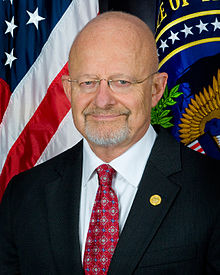 Consider the testimony of of James R. Clapper Jr., the director of national intelligence, to the Senate in March. Clapper said unequivocally that the N.S.A. was not gathering data on millions of Americans. That is obviously false and Senators hearing the testimony knew that the public was being lied to.
How about this exchange?
Senator Wyden: “Does the N.S.A. collect any type of data at all on millions or hundreds of millions of Americans?”Clapper: “No, sir. Not wittingly.”
However, it was done “wittingly” when you demand all of the calls for all citizens, right? Clapper will argue that he simply defines collecting data differently from the vast majority of humanity. However, courts regularly reject such subjective views of the truth. The point of the answer was to assure the public that they have nothing to worry about — the same message being given by members now that the truth has come out. Clapper’s testimony was for the public to hear and believe — even though Senators knew it to be untrue. Keep in mind that we have two surveillance programs now being reported — one collecting all call information and one involving email data.
Clapper has recently said that his testimony was “the least untrue” statement that he could make. Yet, of course that would still make it an untrue statement — which most people call a lie and lawyers call perjury. Indeed, when Roger Clemens was prosecuted for untrue statements before Congress, he was not told of the option to tell the least untrue statement on steroid use.
What is remarkable is that, while such hearings are presented as spontaneous, senators routinely send their questions in advance to officials. That is what Wyden did with Clapper so he knew this question was coming. Afterward, Wyden gave him a chance to correct his statement and he did not.
Gen. Keith B. Alexander, the N.S.A. director, has reportedly also given such false statements. N.S.A.’s general counsel, Rajesh De, called rumors of such spying merely “false myths” and that the suggestion that the “N.S.A. is spying on Americans at home and abroad with questionable or no legal basis.”
There is clearly an effort by Feinstein and others to ignore this testimony to avoid having to deal with their own culpability. The same was true with torture. Congressional members knew of the program while feigning outrage in public. They then worked with the White House to quash any hearings or investigations that would implicate their own involvement.
The result is that the Justice Department will continue to prosecute ordinary citizens for relatively small inconsistencies in testimony or statements to investigators. However, high-ranking officials in both branches will have a license to lie because it is not a lie when no one is willing to acknowledge the truth.
 Our leaders have embraced that core view of Lenin that “A Lie told often enough becomes the truth.”
No comments:
Post a Comment