Monday, April 1, 2013

Every welfare cut listed: how much a typical family will lose per week


Every welfare cut listed: how much a typical family will lose per week

The charity, Child Poverty Action Group, has compiled a list of benefit changes showing the complexity of the Coalition's welfare reform programme. Social policy editor, Patrick Butler reports on what this tells us
• Download the data
• More data journalism and data visualisations from the Guardian
A march in protest at government cuts passes parliament in London on its way to Hyde Park
A march in protest at government cuts passes parliament in London on its way to Hyde Park. Photograph: Peter Macdiarmid/Getty Images
This list of 42 benefit changes, compiled by the the charity Child Poverty Action Group (CPAG), gives a clear sense of the vast scale and complexity of the Coalition's welfare reform programme, which is aimed at saving £18bn a year from the social security budget by 2015.
The government's reform of welfare started in 2010. But the six come into effect on or after 1 April include some of the biggest and most high profile cuts, such as the Bedroom Tax, the household welfare cap, and the abolition of council tax benefit.
These new reforms will take £2.3bn a year out of the pockets of some of Britain's poorest households in 2013-14 alone. According to CPAG:
The £2.3 billion figure represents how much is cut from support for how income households compared to last year (2012/13). However, households have already faced significant cuts since 2010/11. So in 2013/14 the government will be spending £16.5bn less on social security and tax credits than it was in 2010/11. The majority of these cuts impact on the finances of low income families.
CPAG adds that by 2014/15, the cumulative effect of cuts to social security and tax credits since 2010 will be £22bn annually relative to 2010/11.
The list of six does not include another major reform beginning this year - replacement of disability living allowance with personal independence payments - which will by 2016 save an estimated £1bn a year as an estimated 500,000 disabled people have their claim removed.
The CPAG calculation does not include a further non-dependent deduction increase in April 2013 for claimants in private rented accommodation, or the the social fund, which has cut and localised into 150 local welfare schemes which will offer food vouchers in lieu of crisis loans.
Nor does it include the biggest reform of all, Universal Credit, which will be tested in a handful of areas before being rolled out from October 2013. CPAG says it was not included because its mid-year introduction means it is too difficult to calculate its impact.
Universal credit intended to simply the benefit system by wrapping seven means tested unemployment benefits and tax credits into a single payment. The government argues that this will make it easier for claimants to afford to move from benefits into work.
The work and pensions secretary Iain Duncan Smith claims that 2.6m households will have higher entitlements as a result of universal credit, 1.3m of them by over £25 a week. He claims it will lift 350,000 children out of poverty, and that no one will be worse off under the new system. He says:
The early introduction of Universal Credit demonstrates our ongoing commitment to transforming the welfare system and will improve the lives of millions of claimants by incentivising work and making work pay.
But campaigners some groups will lose out: around 450,000 disabled people according to Disability Rights UK; while 400,000 of the poorest families - especially single parent households with children - will be worse off by 2015, according to the Chartered Institute of Housing.
The government argues that raising the personal tax allowance in April will offset the financial impact of some of these cuts. But CPAG says it will do little to help the poorest households:
The working poor generally rely on housing benefit and council tax benefit, so get 85% of the gain from the raising of the tax allowance taken away again because of tapers that mean their benefit is withdrawn as their income rises.
Alison Garnham, Chief Executive of Child Poverty Action Group, said:
Families already struggling with rising living costs face another body blow as a potentially devastating package of benefit cuts is introduced this month which will grab desperately needed financial help away from families and suck billions of pounds of spending power out of local businesses and communities.
The data is below for you to download. What can you do with it?


Data summary

Welfare cuts

Click heading to sort table. Download this data
Number
Reforms
Implementation date
Client groups affected
Total cost to households
Indicative loss per affected claimant
1Child Trust Funds abolished38837Young people£560m for 2013/14£675 per family
2Support for mortgage interest paid at Bank of England interest rates38990Home owners+£10m for 2013/14£11.30 per week
3Education Maintenance Allowance (EMA) abolished39325Young people 16-19 year olds in education£500m for 2013/14£28 per week
4WTC childcare cost support reduction in support from 80% to 70%39172Working parents£350m for 2013/14 
5WTC and CTC withdrawal (taper rate) increase39172Workers£730m for 2013/141.25% for the lowest income decile 0.75% for the 2nd decile 1% for the 3rd decile 1% for the 4th decile 1.1% for the 5th decile
6WTC and CTC disregard for in year income increases reduced to £5KApril 2013, with reductions to £10K in 2011 and 2012 in preparationWorkers£455m for 2013/141.25% for the lowest income decile 0.75% for the 2nd decile 1% for the 3rd decile 1% for the 4th decile 1.1% for the 5th decile
7WTC and CTC £2500 disregard for in year income falls39538Workers£720m for 2013/141.25% for the lowest income decile 0.75% for the 2nd decile 1% for the 3rd decile 1% for the 4th decile 1.1% for the 5th decile
8WTC and CTC new claims and changes of circumstance backdated only 1 month39538Workers£355m for 2013/141.25% for the lowest income decile 0.75% for the 2nd decile 1% for the 3rd decile 1% for the 4th decile 1.1% for the 5th decile
9CTC family element withdrawn for families on more than £40K39538Working parents£125m for 2013/141.25% for the lowest income decile 0.75% for the 2nd decile 1% for the 3rd decile 1% for the 4th decile 1.1% for the 5th decile
10CTC family element tapered immediately after child element39538Working parents£440m for 2013/141.25% for the lowest income decile 0.75% for the 2nd decile 1% for the 3rd decile 1% for the 4th decile 1.1% for the 5th decile
11WTC 30 hour element frozen39172Workers full time£975m for 2013/141.25% for the lowest income decile 0.75% for the 2nd decile 1% for the 3rd decile 1% for the 4th decile 1.1% for the 5th decile
12WTC basic element frozen39172Workers 1.25% for the lowest income decile 0.75% for the 2nd decile 1% for the 3rd decile 1% for the 4th decile 1.1% for the 5th decile
13WTC single parent and couple element frozen for one year39538Working parents£295m for 2013/141.25% for the lowest income decile 0.75% for the 2nd decile 1% for the 3rd decile 1% for the 4th decile 1.1% for the 5th decile
14WTC 50+ element abolished39538Workers over 50£35m for 2013/141.25% for the lowest income decile 0.75% for the 2nd decile 1% for the 3rd decile 1% for the 4th decile 1.1% for the 5th decile
15WTC minimum hours for couple rise from 16 to 2439538Working couples£545m for 2013/141.25% for the lowest income decile 0.75% for the 2nd decile 1% for the 3rd decile 1% for the 4th decile 1.1% for the 5th decile
16CTC baby element abolished39172New parents with babies under 2£275m for 2013/14£545 per year
17Restricted Sure Start Maternity Grant to first child only39172New parents£75m for 2013/14£498 per family
18Abolish health in pregnancy grant39172New parents£150m for 2013/14£380 per family
19Extended conditionality for lone parents on income support IS may stop if your youngest child is over 539447Non working mothers youngest child 5-7 years old£210m for 2013/14£0 (but extra conditionality)
20Housing Benefit: LHA capApril 2011 for all new claimants. Existing claimants on the anniversary of their claim, with nine months of transitional protectionRenters in the private sector£225m for 2013/14£12 per week
21Housing Benefit: Removal of 5 bedroom rate39172Large families in private rental sector£145m for 2013/14£12 per week
22Housing Benefit: Removing £15 excess benefits could claim if their rent was below LHA39172Renters in the private sector£240m for 2013/14£12 per week
23Housing Benefit: LHA capped at 30th percentile rather than median39172Renters in the private sector£445m for 2013/14£12 per week
24Housing benefit: shared accommodation rate for under 35s39447Young renters 25 - 34 year olds£230m for 2013/14£41 per week
25Housing Benefit: Non-dependent deductions increaseApril 2011, and April 2012 and 2013 againRenters£195m for 2013/14£13.70 per week
26Council Tax Benefit: Non-dependent deductions increase39538RentersLocalisedLocalised
27Contribution based ESA time limited39538Sick or disabled former workers£835m for 2013/14£52 per week
28Abolished youth provision of ESA39538Young people with disabilities£85m for 2013/14£25 per week
29Benefits indexed with CPI not RPI39172All£4.88bn for 2013/14(now uprated at 1%)
30Frozen child benefit rates for three years39172Parents£1.25b for 2013/14£2.96 per week
31Child Benefit. Household with one income £60k and above are no longer eligible39813Parents in households with one earner earning over £60K£1.53b for 2013/14* (includes no.32)£1,300 per year (higher income earners only)
32Child Benefit. Taper for households with an income over £50k39813Parents in households with one earner earning over £50K£1.53b for 2013/15* (includes no.31)£1,300 per year (higher income earners only)
33Benefit cap £500 per week for couple and lone parent households, £350 for singlesFrom April 2013 (phased roll out by LA)Large families, families in high rent areas£290m for 2013/14£93 a week
34Housing Benefit: Linking LHA increases to CPI2013-14Renters in the private sector£90m for 2013/14£6 per week
35Housing Benefit: Bedroom tax for under-occupation of social housing39903Renters in the social sector with spare rooms£490m for 2013/14£14 per week
36Localisation of Council Tax Benefit with a 10% cut39903All£485m for 2013/14£2.64 per week
37Replacement of DLA with Personal Independence PaymentsApril 2013-2016People with disabilities£1.02b a year when in steady state£16.81 per week overall
38Transfer to Universal CreditOctober 2013- 2017All JSA / ESA / IS/ WTC/ CTC claimants+£100m a year when in steady state+£16 per week
39Benefits uprated by 1% rather than CPI (JSA, ESA, ISA, CTC, WTC)39903All£505m for 2013/14£3 per week
40Child benefit uprated by 1% between 2014/15 and 2016/1740268Parents£175m for 2014/15£3 per week
41LHA increased by 1% between 2014/15 and 2016/1740268Renters in the private sector£105m for 2014/15£3 per week
42Increase earnings disregard in UC by 1% rather than CPI for 2 years40268Workers£170m for 2014/15£3.20 per week

Download the data

Grant Shapps hits back at church coalition over 'myths' about poor


Grant Shapps hits back at church coalition over 'myths' about poor

Conservative party chairman responds to accusations that government has systematically misrepresented the poorest in society
Grant Shapps 2010
Grant Shapps: 'Everyone’s children will be expected to pay back for our debt today. That is unfair as well.' Photograph: Richard Sellers/Sportsphoto Ltd/Allstar
The government have became embroiled in a row with a church coalition over its claims that far-reaching welfare cuts coming into force on Monday are predicated on dishonest "myths" perpetuated by politicians about the poor.
The Baptist Union of Great Britain, the Methodist Church, the United Reformed Church and the Church of Scotland joined forces to accuse the government – and sections of the media – of the "systematic misrepresentation of the poorest in society".
During a round of interviews on Sunday, Grant Shapps, the Conservative party chairman, hit back. "Where were these people jumping up and down as those housing waiting lists doubled under the previous administration?" he asked. "Why weren't we hearing from the churches?"
Shapps was primarily speaking about the so-called bedroom tax, which comes into force on Monday and which will result in people in social housing losing 14% of their housing benefit if they are deemed to have one spare bedroom or 25% if they are deemed to have two spare rooms.
Labour has produced fresh evidence, based on information from councils about unoccupied properties, suggesting that 19 out of 20 families affected would be unable to move to a smaller property even if they wanted to because suitable social housing is not available in their area.
But the bedroom tax is just one of several landmark benefit changes coming into effect this month, making April 2013 potentially a decisive moment in the reshaping of the welfare system, as well as one having maximum impact on those most affected by the government's austerity-driven cuts.
Other new measures coming into force include cuts to council tax benefit, which is being localised, benefits rising by less than inflation, cuts to legal aid, the imposition of the welfare benefit cap and the start of the rollout of universal credit.
Paul Morrison, public issues policy adviser at the Methodist Church, said the churches were concerned that the benefit cuts were "a symptom of an understanding of people in poverty in the United Kingdom that is just wrong". Speaking to the BBC, Morrison said: "It is an understanding of people that they somehow deserve their poverty, that they are somehow 'lesser', that they are not valued. The churches believe that they are valued and we believe that they should be treated much more fairly than they are being."
Morrison and other church figures were promoting a report published recently by the four churches accusing politicians and the media of promoting six myths about the poor: that they are lazy; are addicted to drink or drugs; are not really poor; cheat the system; have an easy life; and that they caused the deficit.
"The systematic misrepresentation of the poorest in society is a matter of injustice which all Christians have a responsibility to challenge," the report says.
Morrison said: "We saw that people who we value, who we believe God values and God loves, we saw them being insulted day in and day out in the media, and that needed to stop. The consequence of the attitudes towards the poor is that welfare cuts like this become more acceptable, so it's right that we criticise that too."
The churches spoke out as Shapps issued a news release over the weekend claiming that 878,300 people claiming incapacity benefit – more than a third of the total – had chosen to "drop their benefit claim entirely rather than face a medical assessment". The release implied that many of those claims were bogus, but no information was given about why claims were dropped.
Campaigners claimed the claim was an example of the misrepresentation criticised by the churches. Sue Marsh, a sickness and disability benefits campaigner, said: "People drop claims for all sorts of reasons but the majority, according to the Department for Work and Pensions' own figures, found work or got better. That shows that people are generally honest."
Tony Wilson, from the Centre for Economic and Social Inclusion, described Shapps's news release as an unhelpful diversion from the real problem. "There's no evidence at all that people have closed their claims because of the test," he said.
Shapps told interviewers that he "absolutely" disagreed with the argument from the church coalition that the poor were being penalised.
He said the overall aim of the government's welfare changes was to ensure that it paid to be in work and insisted that tackling the deficit was a moral cause. "One of the cruellest things of all is to have a huge deficit in this country, meaning that everyone's children will be expected to pay back for our debt today. That is unfair as well," he said.
In one interview, he criticised a BBC News presenter for asking him about the "bedroom tax". "You are using Labour's term. And you are wrong," he said. "A tax is something people pay out of income."
The Tory chairman said the bedrooms measure was ending the "spare room subsidy" – "a common-sense reform which in the end will help house more people".
Labour has repeatedly linked this week's cuts with the cut in the top rate of income tax from 50p in the pound to 45p. On Sunday night, theConservatives challenged Labour to say what welfare cuts it would reverse, but Labour would not budge from its position that it would announce its plans at the time of the general election "when we know the state of the economy and public finances we will inherit".

Rich cabinet with no empathy for the poor


Rich cabinet with no empathy for the poor

I agree with every word in the letter (28 March) from 50 experts on thewelfare state. However, I think the appeal to civic values is misplaced. I work with high-risk offenders, and I see in this cabinet individuals who display identical deficiencies in empathy, and who have no consideration for the more disadvantaged or the consequences of their actions. It seems to me that appealing to their rationality and goodwill is a less appropriate way forward than understanding their psychopathology: the government is driven by a fear of impoverishment that is turned outwards into hostility to the poor, and a desire to extract as much wealth as they can by diverting public funds into private profit before the next election (while disguising their aims as austerity and wealth creation). So, if their empathic side is nonexistent, we have to do more than appeal to it or to engage them in rational discussion. The question, of course, is what.
Joanna Hughes
Cheltenham, Gloucestershire
• The 50 professors are right to attack the demonisation of "shirkers", but they are in danger of sowing illusions about the nature of modern Britain. When did we ever have a "fair collection and redistribution of resources"? When was the "trust between different sections of society" which they seek to uphold? Instead of exhorting a government of millionaires to be fair and protect the poor, surely such renowned people should lay bare that fairness and protection is the last thing such a government will ever wish to achieve.
Gordon Teal
University of Leeds

Britain's day of shame on welfare


Britain's day of shame on welfare

woman pulls her shopping basket
Vouchers and prepaid cards come with restrictions on what users can buy with them. Photograph: Carl De Souza/AFP/Getty Images
Your report on the arrival in Britain of food stamps highlights one of the many knock-on effects of the changes to welfare provision this year, some starting today, 1 April, and others coming later (UK poor to get food stamps in austerity drive, 27 March).
There is no doubt that hunger is on the rise in Britain, and urgent action is required to halt escalating numbers of people reliant on emergency food aid in this country. The report A Zero Hunger City: Tackling FoodPoverty in London, launched last week following an investigation on behalf of the London assembly's health and environment committee, examines food poverty in the capital and makes recommendations relevant to all of the UK about how hunger can be addressed. It focuses particularly on the rise of food banks and on child and pensioner hunger.
The report warns against the very real danger of food banks becoming part of the formal welfare system. Unless we heed the warnings from North America, we will unwittingly shift our welfare system towards a model in which the state becomes dependent on charity to function. If we take on board any lesson from the US and Canadian experience, it should be that, if we go down the North American route, food banks won't just be a temporary sticking plaster but a permanent feature of our society.
Fiona Twycross
Labour member of the London assembly
• Family Action is concerned that some of the most disadvantaged and marginalised individuals and families could face a postcode lottery of assistance with financial hardship. This is not only for the reasons mentioned in your article but also because pressures on local authorities to prioritise funding may lead them to implement local rules on entitlement. This could mean that people in crisis situations who urgently need financial help or those resettling after leaving refuges, prison or other institutions may receive different levels of support simply because of where they are geographically.
Welfare has a vital role in engaging some of the most excluded with services. In the experience of our support workers the offer of a grant to replace a broken cooker or to buy a decent bed can be an effective way of engaging the most difficult-to-reach families and individuals. Restricting the way in which the fund is distributed to vouchers and prepaid cards risks taking away a useful lever to engagement.
Giving service users some choice over a small cash budget can also have a transformative effect, helping to build self-esteem and a desire to engage with the process of change.
David Holmes
Chief executive, Family Action
• Having read Zoe Williams (Tories want to relegate those on benefits to a world outside money, 28 March), I have to wonder how many of these "poor" people she knows. My 20-year-old son, his 19-year-old girlfriend and their son needed a crisis loan as he had lost his job and they had not received any benefits. The loan of £65 was paid into his bank and immediately disappeared out of his account to pay off a Wonga loan. If they had been given a food voucher, Wonga would not have got the money and they would have had something to eat.
Mary Daykin
Chorley, Lancashire
• In the 1930s I worked in east London. By then a scale of cash payments had been introduced for the unemployed, but there remained an alternative of food tickets which were regarded as a stigma applied to the undeserving poor. It seems we are returning to that era.
Len Clark
Godalming, Surrey
• So, the government won't risk claimants squandering their social fund payments on fags and booze but is happy to trust them with several hundred pounds of housing benefit paid direct to their bank accounts each month. Can't the government make up its mind?
Louise ffoulkes
London

The day Britain changes: welfare reforms and coalition cuts take effect


The day Britain changes: welfare reforms and coalition cuts take effect

A new world heaves into view this week with sweeping changes in the fields of welfare, justice, health and tax
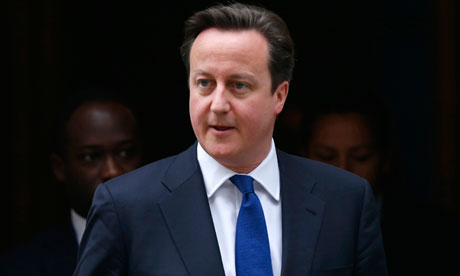
David Cameron
David Cameron leaves No 10, Downing Street: many of his government's radical cuts and reforms are due to be introduced this week. Photograph: Andrew Winning/Reuters

Monday 1 April

Bedroom tax introduced
The aim is to tackle overcrowding and encourage a more efficient use of social housing. Working age housing benefit and unemployment claimants deemed to have one spare bedroom in social housing will lose 14% of their housing benefit and those with two or more spare bedrooms will lose 25%. An estimated 1m households with extra bedrooms are paid housing benefit. Critics say it is an inefficient policy as in the north of England, families with a spare rooms outnumber overcrowded families by three to one, so thousands will be hit with the tax when there is no local need for them to move. Two-thirds of the people hit by the bedroom tax are disabled.
Savings: £465m a year. As many as 660,000 people in social housing will lose an average of £728 a year.

Monday 1 April 

Thousands lose access to legal aid
Branded by Labour a "day of shame" for the legal aid system, the cutoff to claim legal aid will be a household income of £32,000, and those earning between £14,000 and £32,000 will have to take a means test. Family law cases including divorce, child custody, immigration and employment cases will be badly affected.
Savings: a minimum £350m from £2.2bn legal aid bill.

Monday 1 April

Council tax benefit passes into local control
Council tax benefit, currently a single system administered by the Department for Work and Pensions, is being transferred to local councils with a reduction in funding of 10%. Council tax benefit is claimed by 5.9 million low-income families in the UK. The new onus on councils has come at a time when local government funding, according to the Institute for Fiscal Studies, has fallen by 26.8% in two years in real terms. A Guardian survey of 81 councils last week found many claiming they face difficult cuts, with almost half saying they were reducing spending on care services for adults. This also comes at a time when 2.4m households will see a council tax rise.
Savings: up to £480m a year, but depends on decisions of local councils.

Monday 1 April

NHS commissioning changes for ever
An NHS commissioning board and a total of 240 local commissioning groups made up of doctors, nurses and other professionals will take control of budgets to buy services for patients. They will buy from any service providers, including private ones so long as they meet NHS standards and costs. Strategic health authorities and primary care trusts disappear.
Costs: £1.4bn, mainly in redundancies, followed by savings as high as £5bn in 2015 owing to fall in staff numbers.

Monday 1 April

Regulation of financial industry changes
The Financial Conduct Authority and Prudential Regulation Authority, housed in the Bank of England, replace the Financial Services Authority. The Bank promises these changes do not represent the death and Easter resurrection of the same body. A new, proactive supervisory approach towards the City is promised, focused on outcomes rather than a tick-box culture. It has powers to prosecute, throw people out of the industry and withdraw a bank's licence. Above all it monitors risk to the financial system as a whole.

Saturday 6 April

50p tax rate scrapped for high earners
Announced in the 2012 budget. George Osborne said the 50p rate, introduced in April 2010, caused massive distortions in 2010-11 and raised only £1bn, rather than the £2.5bn forecast by Labour back in 2009. HMRC found £16bn was deliberately shifted into the previous tax year, largely by owner/directors of companies taking dividends in the previous year when the highest rate was still 40p. Labour claims 13,000 millionaires will get a £100,000 tax cut.

Monday 8 April

Disability living allowance scrapped
The personal independence payment (PIP) replaces the disability living allowance and, according to the DWP, is not based on your condition, but on how your condition affects you, so narrowing the gateway to the PIP.
It will contain two elements: a daily living component and a mobility component. If you score sufficient points, a claim can be made. Assessments will be face-to-face rather than based on written submissions, starting in Bootle benefits centre, handling claims across the north-west and north-east.

Monday 8 April

Benefit uprating begins
For the first time in history welfare benefits and tax credits will not rise in line with inflation and will instead for the next three years rise by 1%. Had there been no change benefits would have risen by 2.2%. Disability benefits will continue to rise in line with inflation.
Savings: £505m in the first year, rising to £2.3bn in 2015-16. Nearly 9.5 million families will be affected, including 7 million in work, by £165 a year.

Monday 15 April

Welfare benefit cap
The most popular of the welfare reforms will begin on 15 April in the London boroughs of Bromley, Croydon, Enfield and Haringey. The intention is that no welfare claimants will receive in total more than the average annual household income after tax and national insurance – estimated at £26,000. Other councils will start to introduce it from 15 July and it will be fully up and running by the end of September. Some estimate 80,000 households will be made homeless. The DWP says around 7,000 people who would have been affected by the cap have moved into work and a further 22,000 have accepted employment support to move into work. Households where someone is entitled to working tax credits will not be affected.
Savings: £51m over three years.

28 April

Universal credit introduced
The new in- and out-of-work credit, which integrates six of the main out-of-work benefits, will start to be implemented this April in one jobcentre in Ashton-under-Lyne, Greater Manchester. The aim is to increase incentives to work for the unemployed and to encourage longer hours for those working part-time. It had been intended that four jobcentres would start the trial in April, but this has been delayed until July, and a national programme will start in September for new claimants. They will test the new sanctions regime and a new fortnightly job search trial, which aims to ensure all jobseeker's allowance and unemployment claimants are automatically signed onto Job Match, an internet-based job-search mechanism. Suspicion remains that the software is not ready.

UK - Benefit cuts bite down on the poor and disabled as poll tax spectre reappears

Link

Benefit cuts bite down on the poor and disabled as poll tax spectre reappears

Renters have to deal with bedroom tax, some disabled people totally lose benefits – but if you're a millionaire you'll be quids in
David Cameron
Although Cameron's benefit cuts will hit the poorest members of society hardest, the 5p top tax rate will save the wealthiest £40,000 annually. Photograph: Andy Rain/EPA
Unlucky for some is an understatement, at the dawn of financial new year 2013. The cuts are coming so thick and fast, that for many April will feel like a slap round the face with a cold fish.
Perhaps there are families out there who will be hit by all the welfare"reforms" at once, but I'd soon run out of fish if I tried to describe one, so let's concentrate on two groups …
First up, hard-up renters are about to discover that they really can't win.
Where their family is too big they face an arbitrary new benefit cap; where it is deemed too small for a council house they face the "bedroom tax". This supposedly targets "under-occupation" after children leave home, so – just to make sure that these families are screwed every which way – the government has ramped up charges that apply when grown-up kids return to the nest.
Oh, and even if such a family relents and moves, its will soon discover that housing benefit no longer rises in line with anything as material as rent. Instead, it will be pegged to the slower climb in the cost of shopping, before being squeezed down further next year.
The unhappy new year of disabled people is also worth wheeling into the spotlight. As Scope and Demos set out last week, many will be told they are no longer disabled during 2013/14. That sounds like it should be good news, but sadly we're not talking about the regrowth of lost limbs or any other medical miracle. Rather, Whitehall has done its sums, and decided that so far as the system is concerned there are simply going to have to be fewer disabled people from now on. On top of that, there are thousands whose condition is beyond argument, but who will nonetheless have their money stopped because they have had the cheek to be sick or disabled for too long.
All this will leave some frail folk needing emergency finance. The social fund piggy bank might have helped them, but it is being smashed this month, and so they will be left squabbling with cash-strapped councils about the cut-price local schemes drawn up in its place. And just as town halls are transformed into The Bank that Likes to Say No, cash-strapped people will suddenly face having to contribute towards town hall bills, thanks to the shredding of council tax benefit …
The list of great British administrative cock-ups is long indeed, but there is no argument about the number one spot. One sober academic analysis of the community charge is called Failure in British Government, and another called Fiscal Anarchy in the UK. Invoking its name puts any policy beyond the pale – household metering, for example, was called a poll tax on water, and rail privatisation a poll tax on wheels. A generation after the original catastrophe, the coalition is going one better and bringing us a poll tax in the original context of local government finance.
The council tax will continue to charge (slightly) more of waged people in large than small homes – it is only in respect of the poor that we are heading back to the 1980s. Exactly as then, town halls are suddenly going to be charged with pursuing poor people for a chunk – then, as now, around a fifth – of their local tax bill. Far more than the flat rate for dukes and dustmen, it was the impracticality of chasing so many people for modest amounts that unleashed "fiscal anarchy" last time. This time the chaos could be redoubled, because every council is writing its own rebate rules.
But perhaps it will all go swimmingly, in which case look out for other welfare state trouble spots. The great NHS overhaul goes live on Monday, and horror stories could emerge sooner rather than later if some GPs prove either incompetent or corrupt in handling the purse strings being thrust on them. Next, a few months down the line, the switch is flicked on Iain Duncan Smith's universal credit. With a new computer, new rules and a need to run old and new systems in parallel, the risks are plain. The government has been winning the moral argument about "scroungers" till now, but this could be the year that it finds itself mired in an argument about competence, which could prove harder to win.
I don't want to write a new year message of unremitting gloom. So let's remember that this week top tax is being trimmed by 5p in the pound, a change worth well over £40,000 annually – so long as you're earning a million. So amid the hunt for good news in 2013/14, it seems especially pressing to wish everybody a prosperous new year.